Carmel Home Renovation ROI: Updates That Really Pay Off
February 5, 2026
February 5, 2026
Thinking about selling your Carmel home but not sure which updates are actually worth it? You want a strong sale price without sinking months and money into projects that do not pay you back. The good news is you can focus on a few practical changes that match what Carmel buyers value most. In this guide, you will see which updates tend to move the needle in 6 to 18 months, what they cost, and how to choose the right ones for your home. Let’s dive in.
Carmel attracts move-up buyers who want space, function, and a clean, move-in ready feel. They care about a functional kitchen and comfortable living areas for hosting. They respond to updated, low-maintenance finishes like durable flooring and neutral paint. Many also look for yards, convenient access to trails and parks, and proximity to spots like the Arts and Design District and City Center. Most important, they expect systems like the roof and HVAC to be in good working order.
The takeaway for you: quick, cosmetic updates that make your home feel fresh often deliver better short-term resale results than major custom remodels.
These updates are fast, relatively affordable, and tend to produce strong buyer response.
A whole-house repaint in a neutral palette refreshes photos and first impressions. Typical cost for many Carmel homes in the 1,800 to 2,500 square foot range runs about $2,000 to $7,000 depending on rooms, ceilings, trim, and paint quality. If your walls show wear, this is one of the best value plays you can make.
Staging helps buyers visualize life in your home and reduces days on market. You can DIY decluttering and focus on clean, open rooms. Professional staging can range from several hundred to a few thousand dollars per month depending on scope. Even partial staging in main living spaces can pay off.
Swap dated light fixtures, cabinet hardware, and outlet covers for simple, current styles. Add a few well-placed LED bulbs. Minor trim touch-ups go a long way. Expect $200 to $4,000 depending on extent. These small changes modernize the look without big disruption.
When your home needs targeted improvements, focus on the areas buyers notice most.
Buyers prefer consistent, durable flooring in main living areas. Refinishing existing hardwood often runs $2,000 to $6,000. Replacing high-wear areas with engineered hardwood or quality luxury vinyl plank typically costs $3,000 to $12,000 depending on size and product. You do not always need to replace every bedroom. Target the entry, kitchen, and main living spaces for the best impact.
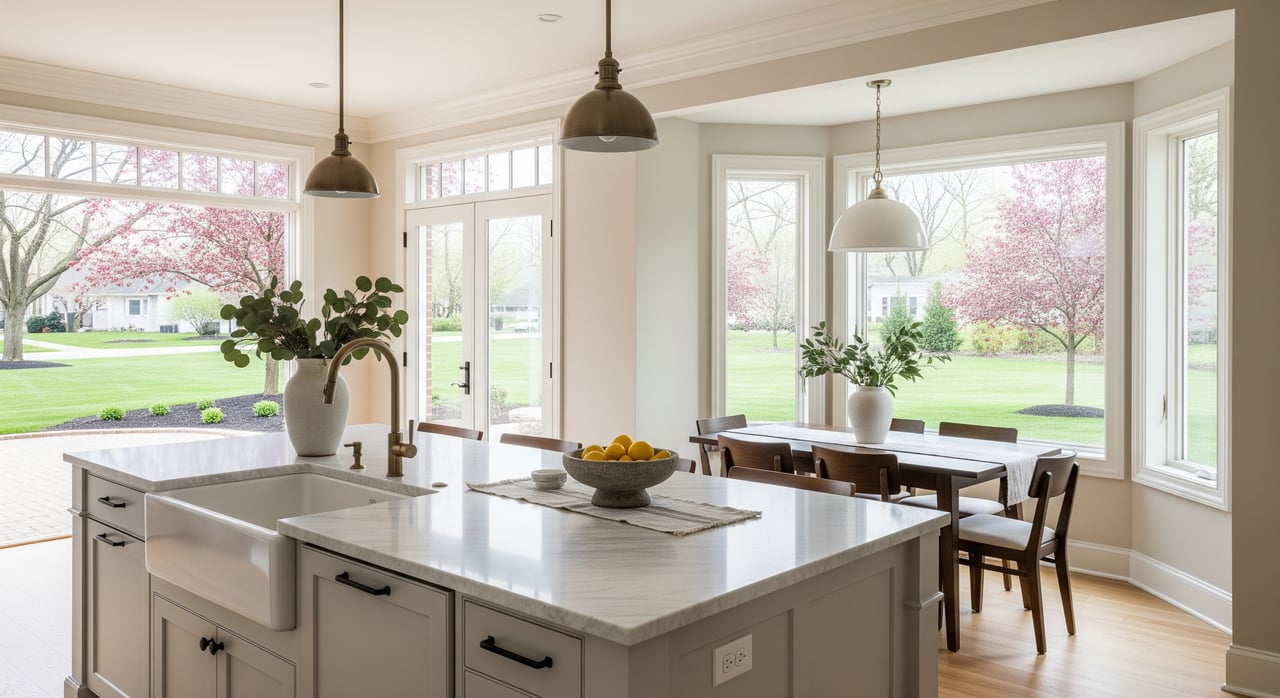
You can modernize the look and function without tearing the room down. Consider cabinet refacing or painting, new hardware, fresh backsplash, a new sink and faucet, and new counters such as quartz if yours are worn. Replace appliances only if they are clearly dated or failing. A minor kitchen refresh commonly falls in the $6,000 to $25,000 range depending on scope. This approach often improves your price and days on market more than a full remodel in the short term.
Fresh paint and a new vanity in the powder room can make a big difference for $1,000 to $6,000. For the main bath, focus on a clean, updated feel with a new vanity, counters, modern fixtures, and either a reglazed tub or focused tile work. Expect $5,000 to $15,000 depending on scope. Clean, well-functioning baths matter more than luxury finishes in most price ranges.
Some projects cost a lot, take longer, and do not always return enough within a 6 to 18 month window.
A mid to upscale full kitchen can cost $40,000 to $120,000 or more. While it can raise your top-line price, percent return often trails simpler refreshes. It also risks overshooting what the neighborhood supports. Consider only if your agent’s comps show strong payoff.
Large additions often exceed $100,000 and extend timelines. They can be worthwhile if your home is undersized compared to nearby sales and buyers pay a clear premium for the extra space. Otherwise, they rarely make sense for a near-term sale.
Bespoke materials and luxury features appeal to a narrower group of buyers. Unless your neighborhood supports those finishes, you may not recoup the cost.
Buyers form opinions from the curb and feel more comfortable when systems are in good shape.
Tidy landscaping, fresh mulch, trimmed shrubs, and a clean entry set the tone. Pressure wash walks, update house numbers, and add simple exterior lighting. Budget $500 to $6,000 depending on scope. This can shorten time on market.
A new garage door can quickly improve the facade for a moderate cost. Industry surveys often rank it among top exterior ROIs. Choose a style that fits the home.
If a system is failing, fix it before you list. These expenses are essential rather than decorative, but they protect your sale price by reducing buyer concerns and inspection issues. Plan for service checks and documentation.
If your exterior shows peeling paint or failing trim, address it. Full repainting is costly, so prioritize repair where needed to stay competitive.
Use a simple decision path to avoid over-improving.
Ask a Carmel listing agent to run a comparative market analysis for your subdivision or nearby streets. Learn what buyers in your price range expect and which finishes earned premiums recently.
Request itemized written bids from local contractors with materials, labor, and timelines. Ask about permits and lead times so you can plan your list date.
Estimate the likely price boost with your agent, then subtract project costs plus carrying costs like mortgage, taxes, utilities, staging, and potential days on market. If the net is weak or negative, skip it.
If you want to sell fast or the market is moving in your favor, lean into quick cosmetics and a smart price strategy. If you have more time and your home is clearly underbuilt for the neighborhood, a larger project can pay off, but only if comps back it up.
Plan your prep so you do not miss the best listing window for your area.
For structural changes, electrical, plumbing, and some exterior work, you may need permits through local authorities. Confirm permit needs with your contractor early. Keep receipts and warranties for any work. Clear documentation builds buyer confidence and helps during inspection and appraisal.
Focus on the items most likely to produce strong returns in Carmel.
There are cases where a larger investment can work. If your home is clearly smaller or less functional than nearby sales and those comps show strong premiums for added space or a high-spec kitchen, a bigger project may pencil out. Confirm with your agent’s CMA and recent neighborhood sales. Ask for three contractor bids and timeline options, then run the net-proceeds math. If the likely gain is real and the timing fits your plan, proceed with confidence.
You do not have to guess which updates will pay off in Carmel. With a clear CMA, a short list of targeted projects, and reliable contractor bids, you can launch a listing that looks great and closes cleanly. If you want a plan tailored to your home and neighborhood, connect with Josh Keen for a quick strategy session. Start the conversation.


Real Estate
Explore the Unique Charm of Zionsville's Undiscovered Properties
Josh Keen's success in the dynamic industry can be attributed to his vibrant personality, unwavering determination, optimistic outlook, and remarkable communication abilities. In the realm of real estate, where unpredictability is often unwelcome, Josh strives to eliminate surprises for his clients.